Showing posts with label Philosophy. Show all posts

Famous Quotes of Dr Maria Montessori


Never help a child with a task at which he feels he can succeed.

The greatest sign of success for a teacher is to be able to 
say, "The children are now working as if i do not exist!".

The child is both a hope and a promise for mankind.


It is the child who makes the man, and no man exists 

who was not made by the child he once was.


Discoveries of Dr Montessori - II


                        In sequel to my earlier post, Discoveries of Dr Montessori - I, few more points are discussed here below : 

7) SEVERAL TOPICS CONSIDERED TOO HIGH FOR THE CHLDREN ARE NECESSARY FOR DEVELOPMENT

                         Maria discovered after careful study that several topics, which were considered too high or out of reach for a child’s knowledge, needs to be discussed in a House of Children. For example, topics concerning Life and Death, love, envy, bodily functions, sex roles, social awareness etc… When these topics were discussed appropriately with suitable examples, Maria saw that the children were mature enough to collect the knowledge required.

8) DISCIPLINE NEED NOT BE ENFORCED

                             In the olden system of education, the teachers infused discipline on the children. But in Montessori method, a totally diverse impression of discipline is witnessed. Discipline is invented when a child absorbs an object of attraction and interest, which provides him spontaneous exercise and also a ‘Control of Error’.

                       In the House of Children, a child behaved well, taking care of himself and others. He showed disciplined behaviour in maintaining silence, handling equipments, and interacting with others. Also the freedom in control of their errors, their love for silence and the difference of opinion for rewards and criticism was clearly displayed.

9) DISCIPLINE MUST COME FROM WITHIN, NOT IMPOSED FROM OUTSIDE

                               Children build up vital social qualities where they behave in a very friendly manner with others, helping them as well as quarrelling with them sometimes. Dr Maria observed that the absence of adults does not influence their discipline or work. 

                                Maria discovered that discipline has two forms. Inner discipline is formed due to the inner urge to follow the rules for development and the Outer discipline depends entirely on this. So, even if discipline is imposed from outside, it should be independent to reveal itself from within. So, discipline and freedom are equally important.


10) REAL OBEDIENCE BECOMES REAL DEVELOPMENT

                               Real obedience is the basis of human values like love, respect, faith, honesty etc… in character training. When this real obedience is practised at the child’s free will, it leads to a superior satisfaction, which becomes real development.

11) A CHILD’S MISBEHAVIOUR IS CORRECTED BY TRAINING HIM SUITABLY

                             Maria often witnessed that children misbehaved badly by showing signs of destructiveness, disobedience and stubbornness. But in a prepared environment under a trained adult, children behave quite opposite, showing orderly, responsible, loving behaviour  Maria discovered that the misbehaviour of the child is due to the fact that the child does not find the right conditions for development. She termed this ‘ The Social question of the child’.

12) Many of the activities presented to the children in the Montessori Schools are the result of the observation and contribution of Dr Maria Montessori. They can also be termed under discoveries. For example, Exercises of Practical Life, The Silent Activity, Walking on the Line etc…

13) Above all discoveries, we could proudly say that the whole ‘Prepared Environment’ is the greatest discovery of Dr Maria, which bases various discoveries where a child can independently work on self-development for his individual and social life.

                                  We would undeniably agree that Maria is a genius and the whole credit goes to her for sacrificing her entire life for the welfare of child education through modern methods.


Discoveries of Dr Montessori - I


              Further to our earlier post, that Dr Maria Montessori made keen observations and derived at some conclusions about the development in children,  let us now jot down and discus few of her discoveries she had made during her lifetime work :

1) CHILDREN LOVE TO WORK AND LEARN PURPOSEFULLY

     When a set of apparatus was given to the children to be used for a limited period of time, the children were keen to go on and on as long as they wanted. So, Maria discovered that the children had inner developmental need, which stimulated them to work with great interest again and again until their goal is acquired. We as adults need to provide necessary prepared environment for this development.

2) CHILDREN WORK WITH CONCENTRATION UNDER RIGHT CONDITIONS

    As explained in the previous point, the inner developmental need ignites an interest in the child. When the child works with an interest, the result is Spontaneous Repetition. Again, when this repetition is done with interest, the product is Concentration. Thus, any activity done with concentration enhances child development. When children are provided the right environment and apparatus, they work repeatedly until achieving a state of concentration for self-development. Maria has explained this in one of her books, where she was surprised to find a three-year old working with a cylinder and board apparatus, and repeated the exercise 42 times to fit the cylinder into the board. This observation made Maria believe that children had an inner urge for repetition of activity.

3) CHILDREN NEED ORDER FOR THEIR DEVELOPMENT

     Children require order not only with the environmental phase but also with values, functions and other human activities. 
      
       For example, the child gets confused when an adult does not practice human value like ‘say the truth’ in everyday life. Also, he is disturbed mentally when any object in the environment is used for a different purpose that it is meant for. For example, old unused toothbrush used for cleaning combs, the other end of a spoon used for tightening screws etc… Similarly, when we give contrary instructions on his behavior, it definitely creates a rift in him. That is, certain behavior, which we allow normally, is not allowed when a visitor is there. 

    We need to understand that a child undergoes everlasting personality development, which cannot be changed or altered once formed. The child looks for uniformity everywhere and he will recognize that things can also be unusual only as time passes by.


4) CHILDREN NEED FREEDOM TO CHOOSE THE ACTIVITY THEY NEED TO PERFORM

     Dr Montessori observed that when a number of learning apparatus is arranged in the shelves, a child has a tendency to choose the activity he finds challengeable, which he finds proportionate to his size and which is also according to his capacity. Maria learnt this principle of  ‘Freedom of Choice’ in her Casa Dei Bambini. One day when the teacher arrived late to school, she was surprised to see that the children had themselves opened the cupboard and selected the materials matching their inner need. She found them busily working with attentiveness, unaware of their surroundings or their teacher’s entry.

5) ACTIVITY IS ESSENTIAL FOR CORRECTING DEVELOPMENTAL ERRORS

     When all human powers work together, the child is termed ‘Normal Child’. But, there may be deviations from this normality in some of the children because of the lack of proper conditions for their development. If the defects caused during Infancy are not corrected, they remain forever and get worse, causing repercussions on mental life and intelligence. These defects vanish when the child gets absorbed in something, which interests him. We should provide a ‘Motive for Activity’ on which the child is so interested that he becomes absorbed in it. This concentration brings back the ‘Normalisation’.

6) DEVELOPMENTAL ACTIVITY BELONGS TO AREAS THAT THE CHILD NEEDS FOR BUILDING HIS PERSONALITY

          The activities like Sensorial, Language, Arithmetic, art and culture is required for the Child’s educational foundation but Maria discovered and introduced a new concept ‘Exercises of Practical Life’ (EPL) which helped in the formation of personality. Examples of EPL are participation of cooking, Gardening, Cleaning the House and other regular activities. Doing these EPL helps the child to increase his intelligence, Neuro-muscular co-ordination, psycho-motor unity, strengthen his will power and voluntary his movements. These developments together constitute the formation of an Integrated Personality.


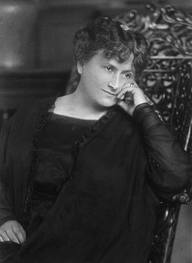
Dr Maria Montessori - Biography


Who is Dr Maria Montessori ?

                      Dr Maria Montessori ( 31st Aug, 1870 to 6th May, 1952 ), is the founder of the Montessori system of education which was named after her. Basically she was a brilliant physician who transformed herself into an admirable, praiseworthy educationalist  I feel really honoured to furnish below her life history, which is definitely a strong inspiration to Montessori teachers like me.


Birth and Early life :

                  Maria Montessori was born in Chiravalle, Ancona in Eastern Italy on 31st August, 1870. Her father was Alexandro Montessori employed in Italian Military Department. Her mother was Renilde Montessori, a cultured and highly educated woman. Though Maria’s father was very strict and had traditional notions, her mother was broad-minded in her opinion, expressions and manners, which encouraged Maria to take up a challenge-able career.
         
          Maria as a girl had radiant intelligence and bursting with energy. At the age of 17, when she expressed her aspiration of taking up Mathematics and science in technical college, her father strongly objected to this. Maria never gave up and fought for several years. Finally, she pursued a medical course, with paediatrics in her final two years of study. Thus, Maria became the first woman in Italy to earn a Medical degree. She graduated in 1896 as Doctor of Medicine and Surgery, with distinction. 


Maria - As a Feminist :

      In olden days, in Italy, girls were not allowed to study with boys. Men dominated woman nastily and this attitude was taken up against Maria also. She was harassed and ill treated by fellow male students. She had horrible nightmares and almost had a nervous breakdown. She silently took in all the hardships and at once decided fight for the rights of women, her entire lifetime. So, when she was offered to represent a Feminist Congress in Berlin in 1896, she will-fully accepted and lectured on the equality of working women against men. Also in 1900, she lectured against child labour in the mines of Sicily, in a Congress in London. 

Maria - researching as a Pychiatrist :

      Immediately after graduation, Maria’s first assignment was at the psychiatric clinic in the University of Rome, where she was appointed to treat mentally retarded children locked up in lunatic asylums. There she witnessed these children being treated with scorn and hatred. She came to a conclusion that if a special kind of education is given, the mental conditions of these children can be improved. So, she started her research, by reading the books and works of Jean Itard, Edouard Seguin and few other psychologists, who were specialists in the education of mentally deficient children.

          In 1899, Maria addressed a pedagogical congress on retarded children in Turin, where she expressed that “ Mentally handicapped children should be offered good education equal to normal children “. Her speech was so impressive that she was requested to deliver a sequence of sermons in Rome and finally she joined the National League for Education on mentally retarded children. 


Maria - Director at an Orthoprenic School :

      Following this, she was offered the position of Director of the State Orthophrenic School, Italy. She began working with the mentally deficient children, observing them, studying them and teaching them. After two years, when the children were taken for an examination along with the normal children, the success was astonishing. But, Dr Montessori was worried, as the normal children had gone backward in their education. So, she decided that normal children should also be offered similar type of educational principles.

                   In 1901, she resigned her job and started thinking about education for normal children. In order to equip herself to support the indefinite assignment, she took up courses in the University of Rome on Philosophy, Psychology and also studied on the nervous diseases of children. In 1904, she was appointed as the Professor of Anthropology and published her very First book ‘ Pedagogical Anthropology ‘. 

Her First Casa :

              Dr Montessori was waiting for an opportunity to experiment on the behaviour of normal children. Her wish came true in 1906, when she was offered the job to direct a school of children living in low-grade housing societies. Since their parents were poor, uneducated and were almost away from home on day labours,  these children were left uncared instigating annoyance to the neighbourhood.  Maria with the help of her only assistant Candida ( Best known as Signorina Nuscitelli ), organized and prepared an environment for the children to explore freely and safely.

                   This is how the first Casa Dei Bambini ( The House of Children ) was inaugurated in San Lorenzo in 6th Jan, 1907. Here, Dr Montessori experimented and discovered a lot of superior qualities that the children possess. She quoted that “The intention of true education for very young children should be to fundamentally assist the development of physical, mental and spiritual growth”.


Recognitin of Montessori Schools :

                        Montessori Method of education was considered a very innovative system among the other educational systems of the world, which was publicized extensively in papers and magazines. Following this, many more Houses of children were opened in Rome and Milan.

                   After intense contemplation, Maria resigned her job as lecturer and gave up medical practice as well. She wanted to dedicate her full time for the education of children. She set up her own methods for teaching and learning. Though her earnings became inadequate, she launched a number of Houses of Children as per her own stipulations. Since, there existed lot of vacancies for trained Montessori teachers in these schools, she gave her first Montessori Teacher Training Course in 1909. Her lectures were published in a US Magazine in 1910 and translated in more than 20 languages as ‘ Montessori Method ‘.

                   In 1911, Italy and Switzerland approved and followed Montessori method of teaching in their schools. The teachers, who underwent training, started Houses of Children in Europe, Britain, Canada and US. Within two years, more that 100 schools were opened. Montessori Societies were Opened and Association Montessori Internationale ( AMI ) was set up in Berlin and then shifted to Amsterdam which offered proper Montessori Method of teacher training to interested students worldwide.


Life and her works :
    

                   Dr Montessori was a genius and a woman of innovative cleverness. Her students loved her, admired her and called her ‘Mammolina‘, which means ‘Darling Mamma‘. Not only she is a Doctor, an earnest teacher, but also an author. She has written a number of books, which exhibit the outcome of her devoted research. We ought to read all her books to understand her concept and system of Montessori Education. Among her books, The Absorbent Mind, The Secret of Childhood and The Discovery of the Child are A-Must-Read ones.

                   Though Maria’s academic career was a fruitful one, her personal life was a painstaking one. Her love life was a failure and she was in deep sorrow as she was not able to acknowledge her own son in the community. We need to leave this as it is because she never mixed her personal life with work.

Impact of World Wars :
   
                   The two world wars were also disturbing her career. She faced a lot of stern criticism and her method of education was discussed commonly. Her name and methods were openly abused.


                   In 1922, Maria was appointed as Chief Inspector of Schools in Italy and Mussolini’s government agreed to support her in 1924. Later in 1934, she broke up with him due to the difference of opinion. All Montessori Schools were closed in Italy and she was deported to Spain and so AMI also moved to Spain following her. Civil War broke out in Spain in 1936 and Maria had to go to Holland. She resided there from 1937 to 1939. Before the invasion of Holland in 1940 , Maria left for India in 1939 itself accepting the humble invitation of Dr Arundale, the 3rd President of Theosophical Society of Adyar, Chennai.


                   As there were Montessori Schools and teachers already in India, trained by Maria in Europe, she was welcomed enthusiastically. She stayed on for 7 long years in Adyar, Chennai conducting training courses and delivering lectures. She enjoyed her stay in India very much as Indians adored her, respected her and had a high regard for her philosophies and methods.

                   When the world war ended in 1945, she returned to Holland and came back to India again in 1947. She travelled around Pakistan in 1949 conducting training courses. She went to Austria in 1951 and had plans to tour Africa to spread Montessori educational systems. But, to our dismay, on 6th May 1952, she  breathed her last ( due to cerebral haemorrhage ) at Noordwijk-on-sea, Holland.


Practise montessori system :
      

                   Thus, Dr Maria Montessori had toiled all her life for the enrichment on the educational methods for young children. Teachers undergoing Montessori courses have to read her books and adopt her methods on modern philosophy with utmost dedication. We are really privileged to have a great person like Dr Montessori who had given us notions to bring up well-educated children for the brilliant future of mankind. The best way to thank her hard work is that we need to first understand the spirit of the Montessori method. We need to inculcate this and practice meticulously to form a progressive society thus sowing universal harmony.

Philosophy in Child Development


                 We all presume and hope that children are willing to learn since birth. They love exploring and enjoy self-constructing. So, Dr Montessori discovered that their ability to learn could be improved by providing them an enhanced and superior environment. How did she come to this conclusion ? How was the Montessori philosophy invented ? 

Groundwork 

1) Dr Maria observed the children intensely and studied them technically. 

2) Whenever a child does something strange, she would not accept it right away. She quoted, ‘ I shall not believe it yet, I shall, if the child behaves in the same manner again’, in her book, The Secret of Childhood. 

3) So, it becomes evident that the children revealed themselves to Maria and she was clever enough to detect them and draw to conclusions. 

4) She also observed the situations under which the children performed these actions. 

5) She was certain that it was a child’s true character, only when the child performed the action repeatedly under certain conditions without adult manipulation.


Setting up of Montessori System 

         The first Casa Dei Bambini, or House of Children, did not have specified educational principles, when it was started. It contained around 50 to 60 deprived, under privileged children behaving badly. Their parents too did not have any idea as to what educational arrangement they could offer their children.

          When Dr Montessori took up this project of educating these children, she had no specific furnishings or apparatus for the children. In fact she had no qualified teachers to coach them. In short, the set up was a total Zero when compared to the Montessori schools of today.

        But it was in this House of Children that the children revealed their unbelievable features of child nature, their mentality and their capabilities, and also their hunger for needs which were unfamiliar so far. A number of incidents occurred which motivated Dr Montessori to discover several aspects of child psychology. 

          As she possessed a scientific state of mind, she conducted repeated tests on child behaviour through a group of friends who reported the results back to her. After nearly two decades of such severe experimenting, Maria concluded that she had found out a method for child education, known as the Montessori Method which aids a harmonious development of the child’s mind and body. This concept of education was accepted and spread worldwide, still being practised successfully.


A Montessori Classroom